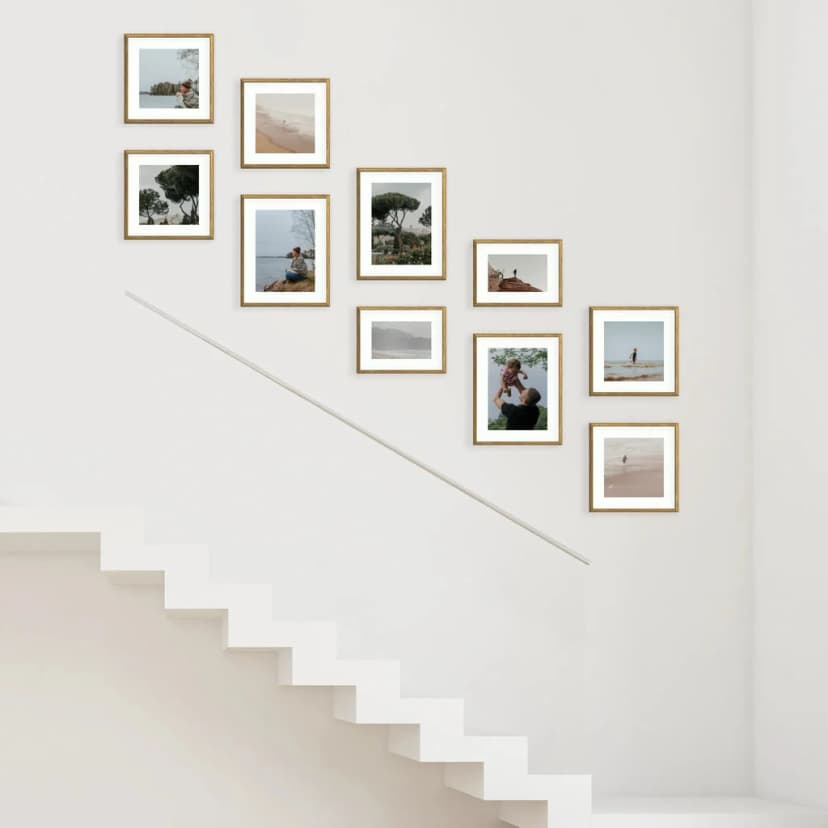
How to Hang a Photo Gallery Wall on Stairs
Hang a staircase photo gallery in about 15 minutes: measure the rise, pick a stepped layout, use Framky’s 1:1 template — no drill.
5 min read
Article
How to hang a photo gallery wall in a rental property without drilling and without risking your deposit — wall types, adhesive hangers, practical deposit protection.
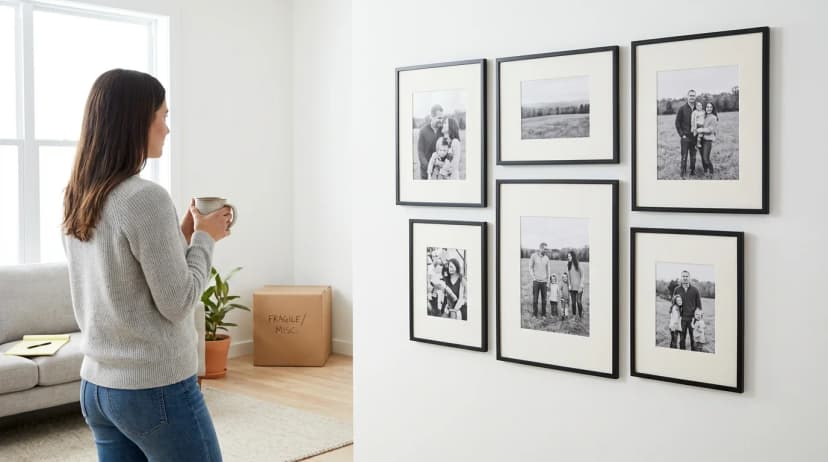
Quick answer: In a rental flat, you can hang a full-size photo gallery wall without drilling, using self-adhesive hangers — provided the paint is properly adhered to the plaster and the wall itself is sound. Before installing, perform a 24-hour test on an inconspicuous wall area. Framky's self-adhesive hangers hold frames up to 50 × 70 cm weighing up to 900g on smooth, painted surfaces.
The UK rental market in 2026 means that most photo gallery walls created in flats aren't owned by the people living there. In tenancy agreements, you'll typically find a clause stating "no drilling or alterations to walls without written landlord consent", and in practice, even a single nail hole can cost £40–100 from your deposit return. Good news: a thoughtfully designed gallery using self-adhesive hangers complies with the letter of most agreements and — with proper preparation — leaves no trace at all.
The "no drilling" clause in most UK tenancy agreements prohibits permanent alterations to walls without landlord consent. Drilling creates holes that require filling and repainting — the exact kind of change the agreement forbids. Self-adhesive hangers don't fall under this restriction because, when removed correctly, they leave no damage. That said, it's worth confirming with your landlord in writing (text, email) before you install.
Yes, under three conditions:
Before you buy six frames and hangers, run a simple test. It takes one day and costs nothing (you need just one test hanger).
You'll encounter roughly five wall types in UK rental flats. The table below shows which walls suit self-adhesive hangers and where the risk is too high.
| Wall Type | Hanger Will Hold | Risk of Damage on Removal | Recommendation |
|---|---|---|---|
| Skimmed plaster + latex paint | Yes | Low | Install confidently after 24-hour test |
| Plasterboard (drywall) painted | Yes | Low | Works well, avoid repeating in the same spot |
| Cement-lime plaster + emulsion | Yes | Low | Standard in UK blocks — safe choice |
| Paper or vinyl wallpaper | Partly | Medium | Test mandatory, often peels the paper layer |
| Old plaster in Victorian/Edwardian properties, flaking paint | No | High | Skip adhesive hangers — use easel or furniture-leaning gallery |
Even if your agreement doesn't explicitly require approval for self-adhesive hangers (since you're not drilling), getting written confirmation protects you. Here's a template you can text or email:
"Hi, I'd like to hang several photos as part of my flat decoration. I'll use self-adhesive hangers — no drilling, no holes — which can be removed without damage. Is this acceptable?"
Keep the reply. If your landlord agrees, you have proof. If they decline, you know to go with alternatives (easel, furniture-based gallery, frame stands).
Each self-adhesive hanger is a potential risk point. Fewer hangers means less risk to your deposit. A good rule of thumb:
Key principle: The shorter your planned stay, the smaller your gallery should be. A good rental gallery for one year = 5–7 frames. A 15-frame gallery only makes sense if you're staying 3+ years.
Removal is when deposits most often get lost. Three rules:
After removal, check the wall under side light. If you see a dull mark, wipe it with a soft, dry cloth. On painted walls, the mark typically fades within hours.
If the 24-hour test failed, the wall won't take hangers, or your landlord objects — you have three sensible alternatives:
Be honest: in three situations, it's better to wait for your own place:
Self-adhesive hangers don't involve drilling, so most agreements don't explicitly forbid them. Still, we recommend getting written confirmation by text or email — it protects you if the landlord changes their mind during the deposit return.
Grip the removal tab at the bottom and pull slowly downward along the wall surface. The tape stretches and releases smoothly. Never pull at a right angle — that's the most common cause of paint damage. Room temperature should be 15–25°C.
Partially. On smooth vinyl wallpaper, the 24-hour test usually passes. On textured or paper wallpaper, the risk of peeling the top layer is high — always test in a hidden area first.
Yes. Framky's self-adhesive hangers hold frames up to 900g for 50 × 70 cm sizes, with guaranteed performance over 24 months in normal home conditions (15–25°C, humidity below 60%). Many Framky galleries hang trouble-free for 3–4 years.
For Framky 20 × 30 cm and 30 × 40 cm frames — 1 hanger. For 40 × 50 cm and 40 × 60 cm — 2 hangers. For the largest 50 × 70 cm — 2 hangers mandatory. You always work with spare load capacity, never at the edge.
95% of the time, it's because the wall wasn't degreased or installation happened below 10°C. Check the spot where the hanger failed — if paint lifted with the tape, that wall isn't suitable for hangers. If the wall is clean, replace the hanger and repeat the procedure.
For a comparison between adhesive and drilling methods, see the guide on no-drill hanging solutions. If you're planning a gallery in a specific rental room, start with the guide on hallway galleries or corridor decoration ideas. The step-by-step gallery planning guide walks through 8 design steps that work equally well in rentals.
Design a custom gallery fitted to your rental dimensions in the Framky gallery configurator — frames without glass, lightweight MDF profiles, and self-adhesive hangers included.
Sign up and we'll send you a code with a bigger discount than the shop offers — plus occasional inspiration for your photo gallery wall.
Hang a staircase photo gallery in about 15 minutes: measure the rise, pick a stepped layout, use Framky’s 1:1 template — no drill.
Hang a photo wall in the stairwell: measure the rise, pick a layout along the banister, use a 1:1 template. No drill, about 15 minutes.
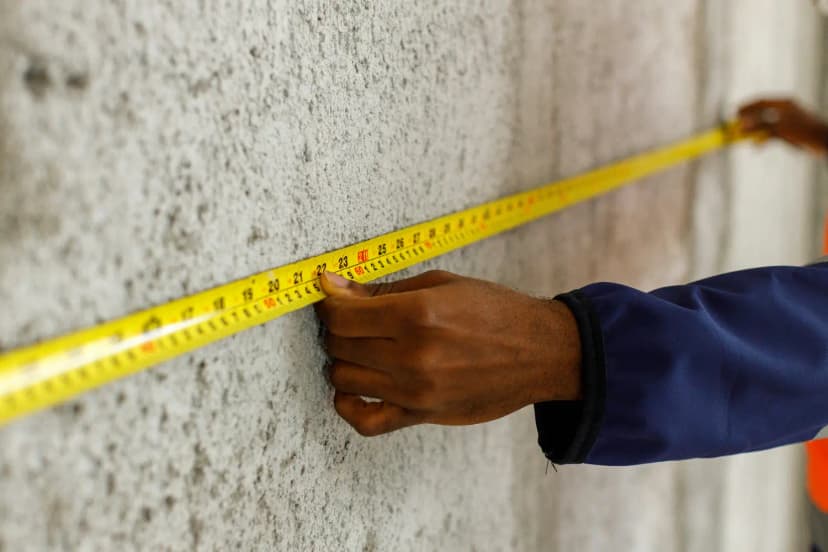
See gallery wall layouts with real sizes — 3, 5, 6, 8, 10+ frames. Match a Framky kit to your wall width, then hang with a 1:1 template.
Give it a try?
See how it works